
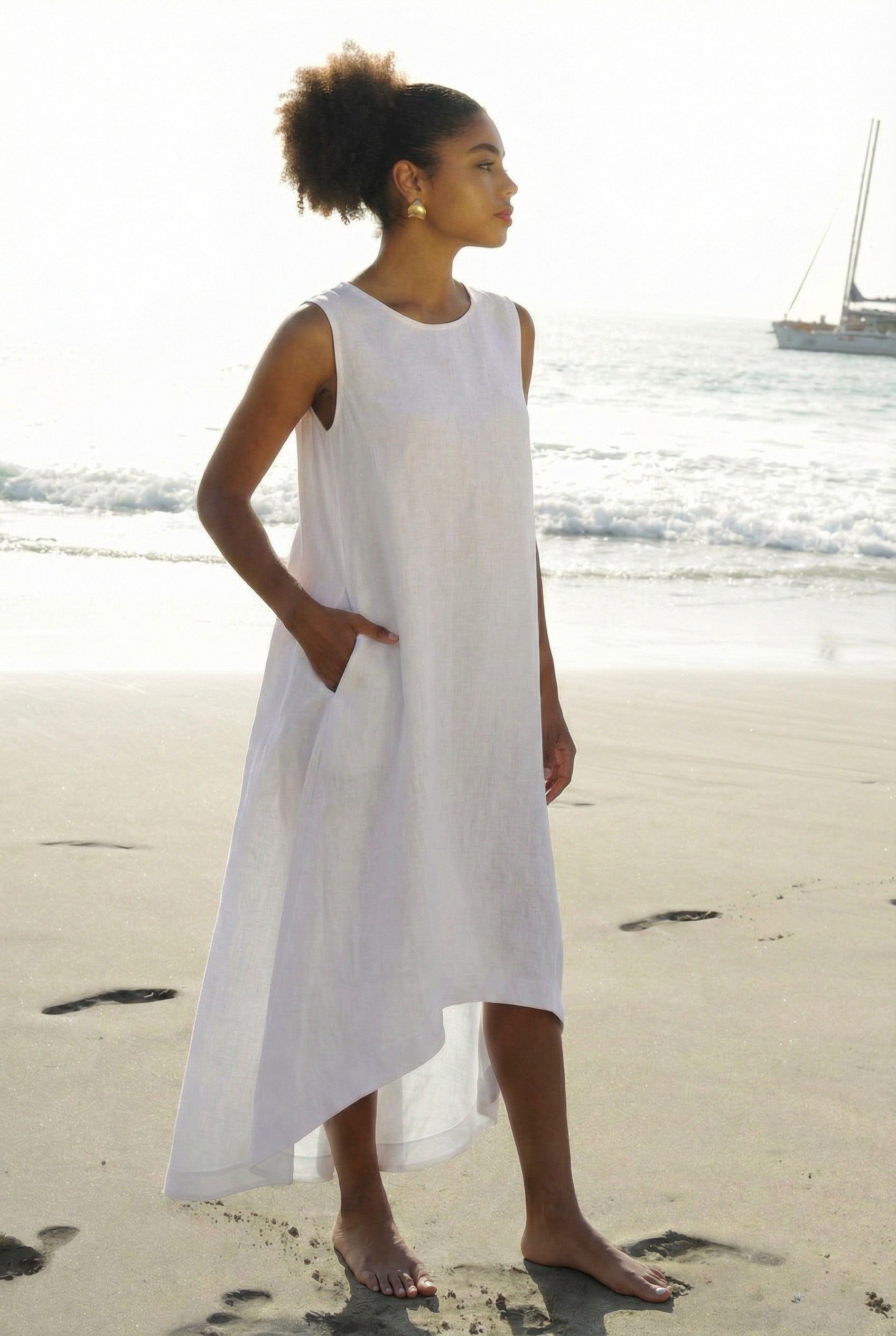



What color would you like your next linen garment to be? Dark blue, snow white, bright pink, or mustard yellow? Because linen takes in pigment incredibly well, you can find beautiful linen dresses and trousers in almost any color imaginable.
But have you ever wondered: what color is linen naturally?

What Is the Natural Color of Linen?
Light buff, oatmeal, and ecru are the most popular natural colors for linen fabric, though shades of light and dark gray are also common.
Because linen is a natural fabric made from the flax plant—a crop that produces blue-purple flowers—its exact color depends heavily on the conditions in which the flax was grown. Sunlight, wind, moisture, and soil composition all determine the base shade of your timeless linen clothing. As a result, there is no single "correct" answer to what color natural linen is.

Why Do Natural Linen Colors Vary?
If you have ever noticed that undyed linen garments from different stores—or even from different purchase dates—look slightly different, there is a fascinating scientific reason behind it. The shade of undyed linen is directly related to the farming, harvesting, and production environment of the flax:
- Green-yellowish shades: This occurs if the flax was harvested early, just before it came to fruition. A greenish tone can also be caused by high nitrogen levels in the farm soil.
- Warm brown shades: This happens when the flax is harvested later than its standard schedule.
- Bluish tints: This subtle tint can develop when the harvested flax is soaked in cold water during processing.

What is Retting, and How Does It Affect Color?
Before flax fibers can be spun into fabric, they must undergo a process called retting. This is a crucial manufacturing step where the fibers are separated from the woody stem of the flax plant. The retting method used has a major impact on the final color of the natural linen:
-
Water Retting: Stalks are bundled and submerged in slow-moving or still water. This washes away most of the plant’s natural dirt and pigments, resulting in a lighter, yellowish tone very close to ecru.
-
Dew Retting: In areas with limited water resources, flax is spread over fields for two to three weeks, exposed to the sun, air, and morning dew. This slower, natural process darkens the fibers, resulting in tones closer to medium or dark grey.
The Beauty of Undyed vs. Dyed Linen
Undyed linen is beloved by many because of its raw, unique aesthetic straight from nature. Beyond its visual appeal, undyed linen retains its natural superior qualities: it is anti-microbial, anti-allergenic, and becomes softer with every single wash.
However, if you prefer bold, vibrant colors, linen fabric is highly receptive to dyes. Modern manufacturers utilize several methods to achieve a vast range of shades:
-
Preparation: First, the raw linen is washed thoroughly to remove any plant residues.
-
Bleaching: To achieve bright, clean colors or pure whites, the fabric's natural color is bleached out first to create a blank, neutral canvas.
-
Dyeing Baths: The material is treated with direct, reactive, or sulfur dyes in neutral or alkaline baths. Direct dyeing is especially gentle because it requires fewer chemicals, ensuring the natural flax fibers remain strong and undamaged.
Natural Linen Colors in Detail
The most common natural color of linen is often referred to as "linen grey"—a beautiful, earthy blend of light grey and soft brown. Depending on the soil, season, and processing methods, every batch of natural linen offers a slightly different, unique surprise. You can expect natural linen to fall somewhere beautifully between ivory, ecru, oatmeal, and taupe. For more tips on keeping your undyed or dyed pieces looking their best, explore our comprehensive linen care guide.


